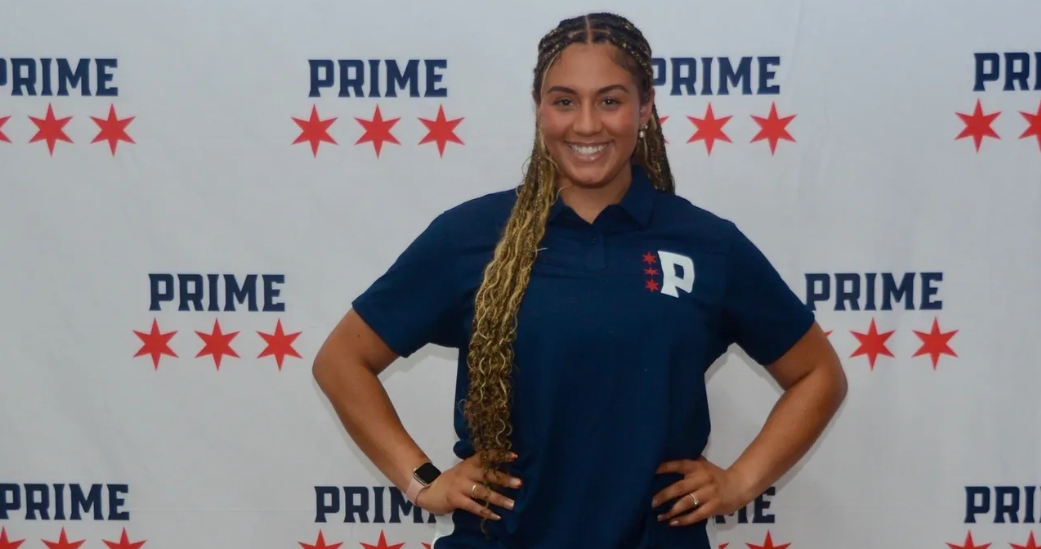
Chardonnay Harris has never shied away from a challenge. As a standout pitcher at Oak Park and River Forest High School, she dominated the competition, leading her team to a state championship before taking her talents to Auburn University, where she competed at the highest level of collegiate softball. Her performances on the mound were nothing short of electric, including a legendary 17-strikeout game against Florida that solidified her reputation as a force to be reckoned with.
Success on the field, however, was never just about talent. Mental toughness played a critical role in Harris’ journey. Throughout her career, she learned that the ability to control emotions, stay present, and trust preparation was just as important as physical ability. One moment in particular shaped her approach to the mental side of the game—a conversation with an Auburn coach who told her, “Get your mental together, and we’ll take care of the physical stuff when you get here.“ That advice stuck, driving her to refine her mindset as much as her mechanics.
Now a certified Mental Performance Mastery (MPM) coach with Prime Mental Performance, Harris is dedicated to helping the next generation of athletes develop the mental resilience that fueled her success. As the head coach of Trinity High School’s softball team, she has taken on the challenge of rebuilding a program that has struggled with coaching turnover. Stability and trust are at the core of her approach, and she has prioritized giving athletes a voice. Ending every team meeting with “Are there any comments, concerns, or questions?” has helped foster an open and accountable team culture.
This season, Harris has also emphasized structured practice routines, prioritizing academics and athletics. By implementing a study hall element and focusing on quality over quantity, she ensures that her players remain engaged, mentally sharp, and prepared for the classroom and field demands.
In her work with Prime Mental Performance, Harris focuses on five core mental skills:
- Awareness: Understanding emotions, energy levels, and focus each day.
- Mental imagery: Using visualization to reinforce confidence and set tangible milestones.
- Signal lights: Recognizing when an athlete is in a green, yellow, or red mindset and developing strategies to adjust in real time.
- Habit stacking: Replacing bad habits with productive ones by making small, intentional changes.
- Journaling: Tracking progress, reflecting on experiences, and reinforcing growth through writing.
The impact of these strategies is undeniable. This past summer, Harris worked with an 18U athlete who struggled with confidence in recruiting. During a conversation with the player’s father, Harris shared her belief that the athlete had what it took to pitch in the SEC. Those words stuck. Months later, the player told Harris that no one had ever believed in her that much—not even herself. “People may not remember everything you say to them, but they will always remember how you made them feel,” Harris reflected.
Mental resilience is built in practice. When players struggle with performance anxiety or fear of failure, Harris shifts the focus from results to process. Effort, engagement, and adjustment matter more than the outcome of a single swing or pitch. Confidence is developed through repetition, self-awareness, and the ability to bounce back quickly.
Patience is the foundation of effective coaching. Harris encourages coaches new to mental performance training to invest in relationships with their athletes beyond the field. The smallest moments—whether in practice, competition, or conversation—often have the biggest impact. A program is only as strong as its weakest player, and when athletes start coaching their teammates with the same values and expectations their coaches instill, the culture is indeed changing.
Looking ahead, Harris envisions mental performance training becoming a staple in youth sports. This season, she plans to expand mental performance training opportunities in the Chicagoland area and offer a specialized camp for softball athletes. The true measure of success isn’t just what happens on the field but how athletes carry these lessons into every aspect of their lives. By equipping young players with the tools to strengthen their mindsets, Harris is preparing them for competition and whatever challenges lie ahead.
Harris is currently the Head Softball coach at Prime Athletic Club, where she works with athletes looking to improve physically and mentally. For those interested in working with her directly, one-on-one mental performance training is available through Prime Mental Performance. Sessions are designed to help athletes at all levels develop confidence, mental toughness, and in-game strategies for peak performance.
Follow Coach Chardy on Instagram for insights into mental performance, training tips, and behind-the-scenes looks at her coaching journey.